What to Know Before Buying a Mid-Century Modern in New Canaan
July 9, 2026
July 9, 2026
If you are thinking about buying a mid-century modern home in New Canaan, you are not just shopping for square footage. You are stepping into one of the most important modern residential stories in the country, where architecture, landscape, and provenance often matter as much as the finish schedule. The right purchase can give you a remarkable home and a lasting design asset, so it helps to know what to look for before you make an offer. Let’s dive in.
New Canaan holds a rare place in modern architecture. The New Canaan Museum & Historical Society says more than 100 modern houses were built there between 1949 and 1973, and its Modern Homes Survey identified 91 modern houses using formal evaluation criteria.
That legacy is closely tied to the Harvard Five: Marcel Breuer, Landis Gores, John Johansen, Eliot Noyes, and Philip Johnson. Other notable figures connected to the area include Edward Durell Stone and John Black Lee. For you as a buyer, that means New Canaan offers more than a style category. It offers a documented architectural context.
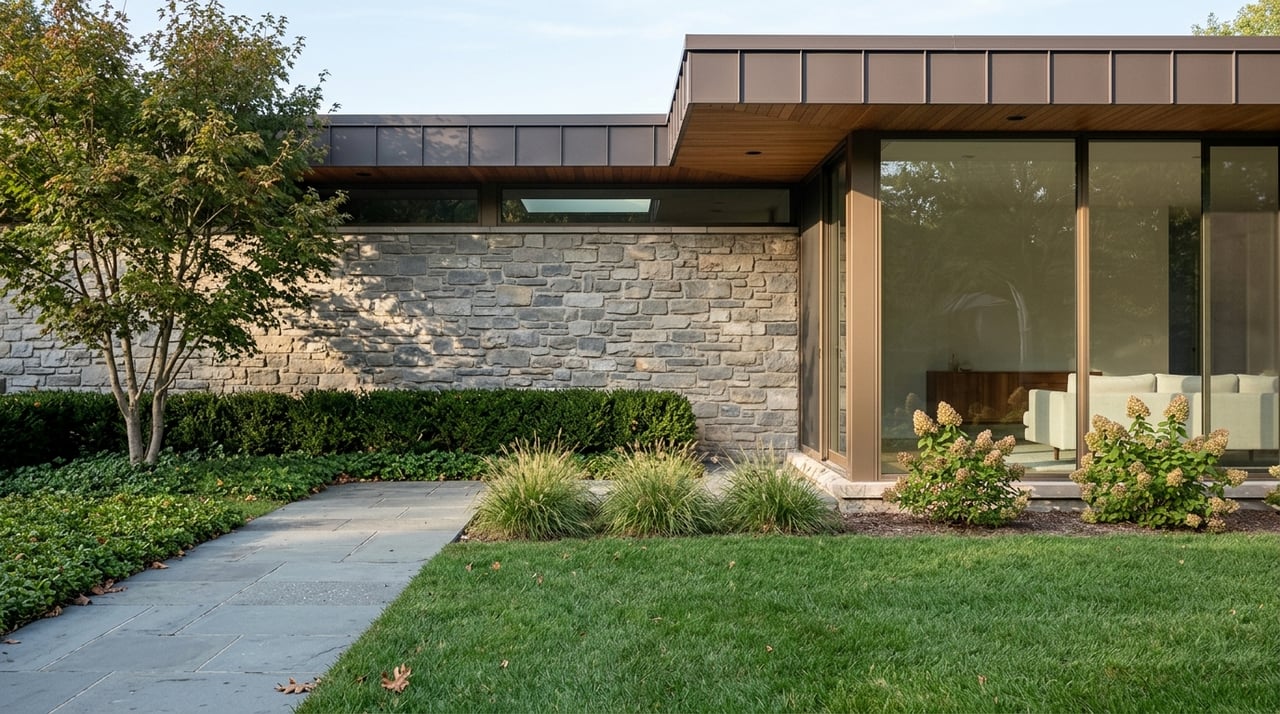
At its best, a New Canaan mid-century home is about light, simplicity, and a strong relationship to the site. The Glass House and the Breuer House examples show the core language clearly: large glass panels, open interior flow, flat rooflines, steel or structural clarity, and a material palette that often includes wood and natural stone.
These homes were designed to connect indoor and outdoor space in a deliberate way. Open-space floor plans were unusual when many of these houses were built, which is one reason they still feel so fresh today.
When you tour a mid-century property, try not to focus only on kitchens, baths, or surface finishes. In architecturally significant homes, the more important questions often involve the integrity of the original plan, window proportions, roofline, built-ins, and the relationship between the house and the lot.
A polished renovation can be appealing, but a design-driven buyer should ask whether the work preserved the home’s architectural intent or simply modernized it. That distinction can affect long-term value, maintenance, and your enjoyment of the house.
In New Canaan, provenance is not a luxury detail. It is part of smart due diligence. The New Canaan Museum & Historical Society research library holds property files, deeds, photographs, architecture files, and even a comprehensive index of demolished houses.
Those records can help you confirm who designed the house, whether that attribution is well supported, and how the property changed over time. If a home is represented as architect-designed or historically important, archive research is one of the most practical ways to verify the story.
Before you move too far into a purchase, it helps to ask:
These answers can shape both your offer strategy and your renovation plans.
Original fabric matters in mid-century homes. In simple terms, that means the physical elements that help define the original design, such as windows, built-ins, finishes, layout, and materials.
A house does not need to be untouched to be valuable or beautiful. But if key features have been replaced without sensitivity to the original design, the home may lose some of the clarity that made it special in the first place.
As you assess a property, pay close attention to:
These details often tell you more than a staged showing ever will.
Many modern homes are beautiful because they push boundaries with glass, structure, and minimal detailing. Those same qualities can create maintenance challenges if repairs were deferred or handled poorly.
Preservation casework often centers on windows, waterproofing, and material-sensitive repairs. National Park Service examples describe resealing original windows rather than replacing them in order to preserve original fabric, and The Glass House has noted that the Brick House required major restoration after water infiltration damage.
A seller’s disclosure package and inspection process should help you understand whether past renovations solved issues or covered them up. You want to know not only what was done, but also how it was done.
Ask about:
In a house where design depends on precision, small building-envelope issues can become expensive if ignored.
Not every notable mid-century home has the same review process. A National Register listing by itself does not restrict a private owner’s use of the property under federal law. A local historic district is different.
Connecticut law says no permit for exterior alteration or demolition in a historic district may be issued until a certificate of appropriateness is granted. New Canaan’s regulations also note that other town agencies, including building, planning and zoning, inland wetlands, and health, may still require permits.
According to the New Canaan Preservation Alliance, the town currently has one local historic district: the New Canaan/God’s Acre Historic District. If the home you are considering is in that district, exterior work may face a different approval path than a property outside it.
This is why one of the first questions to answer is whether the property is locally designated, only listed on a register, or neither. That distinction can affect timelines, design choices, and carrying costs.
Buying a mid-century home often comes with a vision. You may want to restore, expand, or adapt the house for modern living. In New Canaan, the most thoughtful approach is usually one that respects the original design logic while addressing present-day needs.
A 2024 New Canaan Library program on Midcentury Houses Today highlighted adaptive reuse as a sustainable architectural strategy and showcased houses that were reimagined by contemporary architects while retaining their design lineage. That is a useful framework for buyers: change is possible, but it should be intentional.
Connecticut’s Historic Homes Rehabilitation Tax Credit is designed to preserve distinctive features, finishes, and construction techniques while encouraging restoration and repair over replacement. For eligible homes, the program requires:
If you are considering major work, it is worth exploring whether your plans align with preserving the character-defining elements of the home.
Even without the architectural angle, New Canaan is a high-priced and fast-moving market. Recent readings from major platforms point in the same general direction: limited inventory and strong demand, though the exact figures vary by methodology.
Redfin reported a median sale price of $1.61 million over the three months ending May 2026, with homes averaging two offers and about 22 days on market. Zillow reported a typical home value of $2.18 million, 66 homes for sale, and about 11 days to pending as of May 31, 2026. Realtor.com showed a median listing price around $2.7 million, 116 properties for sale, a 103% sale-to-list ratio, and about 20 days on market in May 2026.
When a design-significant home comes to market, you may have limited time to verify details and make a decision. That makes preparation especially important.
Try to enter the process with a clear framework for evaluating:
A disciplined process helps you move quickly without losing sight of what makes the property worth buying.
If you want a practical way to evaluate a New Canaan mid-century home, keep this checklist in mind during your search and contract period.
This kind of review helps you see the house as both a place to live and a work of architecture.
The best mid-century modern purchase in New Canaan is rarely the one with the flashiest finishes. It is the home where architecture, provenance, condition, and future potential align in a way that fits how you want to live.
If you value design, you need more than a standard home search. You need a clear understanding of what is original, what is significant, and what your next chapter with the property could realistically look like. For buyers pursuing architecturally distinctive homes with care and discretion, Jaclyn Picarillo offers a curated approach shaped by provenance, design, and long-term value.
Jaclyn delivers white-glove service and expert representation to clients seeking exceptional properties and seamless transactions. Powered By Higgins Group Private Brokerage & Forbes Global Properties Whether you’re acquiring your first residence, elevating to a larger estate, downsizing with intention, or expanding a distinguished investment portfolio, Jaclyn delivers a bespoke real estate experience tailored exclusively to achieve your goals and exceed expectations. With over 22 years of expertise and record-breaking success as a Realtor in Fairfield County, Jaclyn approaches every transaction with tireless dedication, refined market insight, and an unwavering passion for achieving exceptional results.

JACLYN GAILHARD PICARILLO
(203) 981-5012
[email protected]
OFFICES
30 Elm St
Westport CT 06880
251 Main St
Southport CT 06890
67 Mason St
Greenwich CT 06830
FOLLOW ME