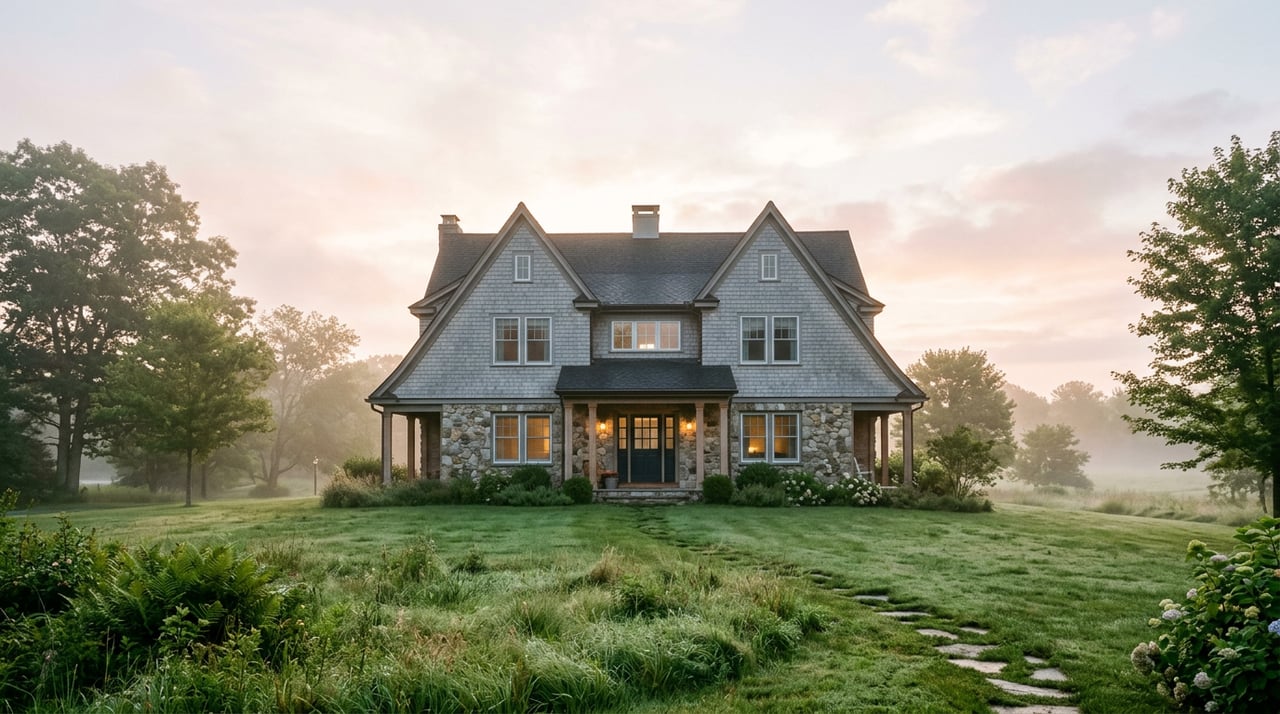
The Preserve Easton Almost Lost to a Golf Course
September 10, 2026
September 10, 2026
Drive north on Sport Hill Road past Helen Keller Middle School this week and you will pass the same tree line that greeted anyone making this same drive thirty years ago. It looks permanent. It looks like it was always going to be there. It was almost eighteen holes and a clubhouse instead.
In 1999, the developer who held the rights to what is now the core of Trout Brook Valley Preserve had plans for luxury homes and a golf course on the property. The deal that stopped that plan is the reason a resident today can hike, fish by permit, watch birds, or walk a dog off leash on land that came within a signature of becoming something else entirely. Understanding that near miss changes how the whole preserve reads, not as a park the town has always had, but as a park the town had to fight for once and now has to keep defending in smaller ways every year.
Aspetuck Land Trust, the nonprofit that has protected open space in Westport, Fairfield, Weston, and Easton since 1967, bought that original 730-acre parcel for $11.3 million. The purchase price came together through a mix of state funding and thousands of local contributions, including support from actor and philanthropist Paul Newman, who lobbied Connecticut's governor on the trust's behalf. Newman lived in Westport, not Easton, which makes his involvement a reminder that this land mattered beyond a single town's tax rolls.
That original purchase has since grown. The trust added the Crow Hill and Jump Hill sections, and in 2023 it protected another 18.7 acres along the Mill River with help from a state Open Space and Watershed Land Acquisition grant, purchased directly from the Town of Easton. Combined, the preserve system now covers 1,009 acres spanning Easton and Weston, with nearly 14 miles of marked trails running from easy walking paths to genuinely steep, rock-strewn climbs past working apple and blueberry orchards.
The 2023 addition is not a footnote. It protects 3,300 feet of riverfront along the Mill River, one of only nine Class 1 Wild Trout Management Areas in the entire state. A new trailhead and parking lot off South Park Avenue gives anglers and hikers access to water quality that most of Connecticut simply does not have anymore. That kind of protection does not happen by accident or by default zoning. It happens because someone at the land trust and someone at the town kept negotiating for a parcel most visitors will never think twice about.
If you walk the preserve regularly, a few practical things are worth knowing this season. The Crow Hill section includes a two-mile loop marked with blue and white blazes where dogs can go off leash, the only such loop across all of Aspetuck's holdings, since the rest of the trust's preserves require a leash to protect nesting birds and vernal pool habitat. Trailhead signage has also gone up recently flagging black bear activity in the preserve, a normal seasonal note rather than a cause for alarm, and a reminder that this is genuinely wild land minutes from Sport Hill Road, not a manicured park.
A City Lifestyle profile reports on Silverman's Farm, where more than thirty acres of orchard have stayed in the same family for a century instead of turning into another subdivision. Benjamin Silverman started the farm in the 1920s, when most households grew their own food because the modern grocery store did not exist yet. His son Irv now runs it, and still shows up on site most days.
Irv Silverman says, "At the time, most people raised their own gardens, because there were no box stores."
Twenty-five apple varieties come through the pick-your-own rows between late June and October, alongside raspberries, blueberries, and peaches. The farm market sells the fruit alongside jams, honey, and cider donuts that regulars will tell you are worth the trip on their own. On Sundays the farm sometimes brings in a food truck or live music, less a marketing event than a continuation of what a working farm has always done on a slow day: give neighbors a reason to linger.
None of that continuity was guaranteed. Silverman's still operates alongside the preserve at Trout Brook Valley. Both are part of Easton's identity as a town with over twenty active farms and roughly a third of its land permanently preserved.
Easton's information habits follow the same pattern. The Easton Observer is a print-only newspaper, and that is a deliberate choice rather than a technological limitation. Its publishers have said plainly that slowing down and reading from a trusted, physical source matters more to them than reach. You cannot subscribe to it in an app. You can only pick it up at four places: Greiser's Coffee & Market, Sport Hill Farm, Redding Ridge Deli, and Silverman's Farm. Its fifth issue came out in late August, and the next one lands September 10.
Online, the Easton Courier covers town government, schools, and community news as a nonprofit partnership between Sacred Heart University's School of Communication, Media and the Arts and Easton residents themselves, students and neighbors reporting on their own town rather than a wire service filing from somewhere else.
Alongside the Easton Courier's online coverage, the Observer keeps a print presence at four pickup locations. A press run limited to four pickup locations will never compete with a regional media chain on reach.
The land purchase, the family farm, and the print newspaper are part of Easton's story, not evidence that Easton is naturally resistant to change. Together, they show how land and local institutions have endured amid change.
The next time you're on the Crow Hill loop or picking up cider donuts on Sport Hill Road, that context is worth carrying. The ground under your feet and the farm stand at the end of the drive are both part of Easton's landscape.
If you know Easton this well, you probably also know how rarely land like this changes hands, and how much scrutiny it deserves when it does. Jaclyn Picarillo works with property in towns like this one, where provenance and preservation are part of the value, not separate from it. If a conversation about a specific property or parcel in Easton would be useful, reach out to request a confidential portfolio.
Jaclyn delivers white-glove service and expert representation to clients seeking exceptional properties and seamless transactions. Powered By Higgins Group Private Brokerage & Forbes Global Properties Whether you’re acquiring your first residence, elevating to a larger estate, downsizing with intention, or expanding a distinguished investment portfolio, Jaclyn delivers a bespoke real estate experience tailored exclusively to achieve your goals and exceed expectations. With over 22 years of expertise and record-breaking success as a Realtor in Fairfield County, Jaclyn approaches every transaction with tireless dedication, refined market insight, and an unwavering passion for achieving exceptional results.

JACLYN GAILHARD PICARILLO
(203) 981-5012
[email protected]
OFFICES
30 Elm St
Westport CT 06880
251 Main St
Southport CT 06890
67 Mason St
Greenwich CT 06830
FOLLOW ME