New Canaan CT Architectural Homes: From Colonials to Modern Icons
April 23, 2026
April 23, 2026
If you are drawn to homes with a point of view, New Canaan stands out right away. Few towns offer such a clear mix of early American character, estate-scale landscapes, and nationally recognized modern design in one place. For buyers who care about architecture as much as address, this is a market where style, setting, and story often matter together. Let’s take a closer look.
New Canaan’s appeal comes from range, not sameness. According to the Church Hill Historic District nomination, the town’s built fabric includes Georgian, Federal, Greek Revival, Queen Anne, and Colonial Revival architecture, with notable mid-twentieth-century modern homes adding another important layer.
That long timeline gives the town a rare kind of depth. Instead of one dominant look, you find a conversation between symmetry and experimentation, between formal streetscapes and open, light-filled modern design. The result is a place where architectural taste can take several different forms without feeling disconnected from the larger setting.
The New Canaan Museum & Historical Society reinforces this identity by highlighting both the town’s Colonial-era records and its preserved midcentury-modern legacy. In practical terms, that means New Canaan is not simply historic or modern. It is both.
If you love classic New England architecture, New Canaan gives you strong reference points. The historic core around Church Hill, Main Street, and Oenoke Ridge is especially important because it reflects the town’s earliest surviving residential character and later revival-era additions.
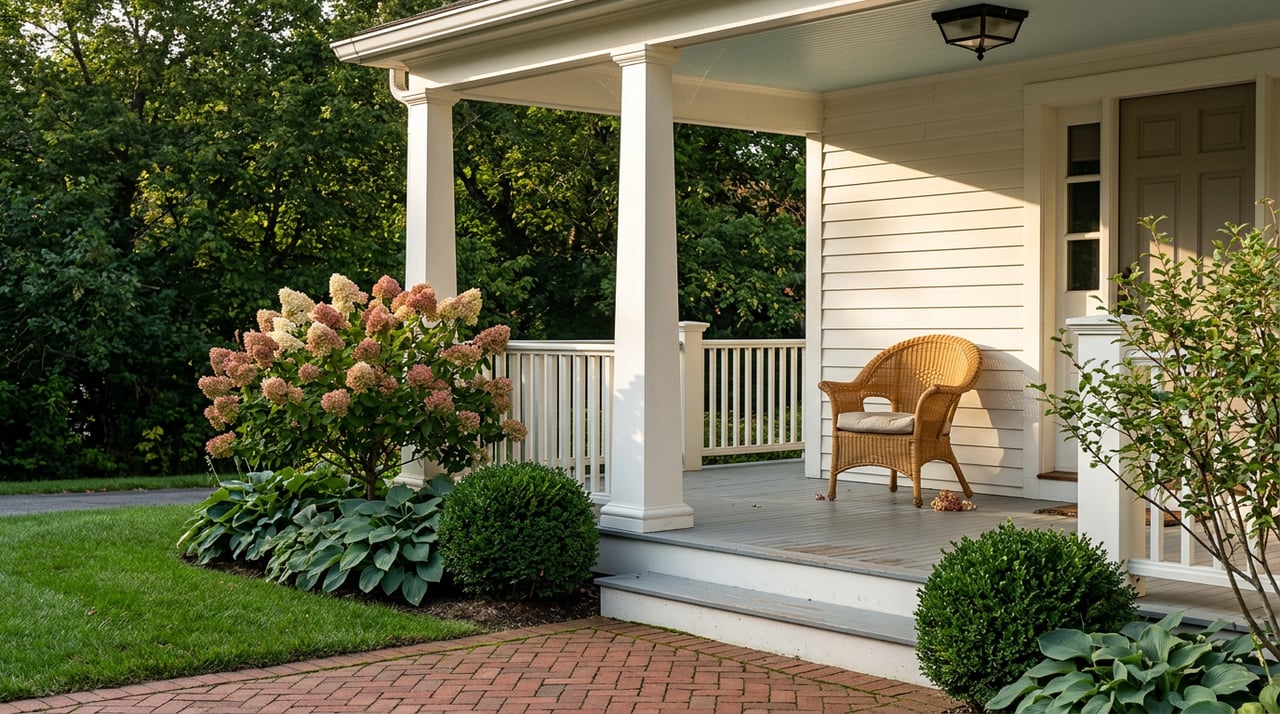
In these areas, architecture often reads as orderly and grounded. Georgian and Federal forms bring balance and proportion, while Greek Revival and Colonial Revival buildings add their own sense of tradition and civic presence. Later Queen Anne examples introduce more texture and visual variety.
For many buyers, this part of New Canaan is appealing because it offers more than style alone. It also reflects continuity. The town’s older streetscapes show how newer eras were layered onto the existing fabric rather than fully replacing it, which helps preserve a strong sense of place.
The Church Hill area is one of the clearest places to understand New Canaan’s colonial-to-revival story. As outlined in the National Register documentation, this district centers around God’s Acre, Main Street, and Oenoke Ridge.
If you are considering a home with historic character, this context matters. Connecticut law allows municipalities to create historic districts to help protect the distinctive characteristics of buildings and places associated with a period or architectural style, and New Canaan has used that framework in places such as Church Hill. You can review that preservation framework in the Connecticut General Statutes.
For a buyer, that can shape both the appeal and the responsibility of ownership. A historic home may offer provenance and architectural integrity, but it can also come with stewardship considerations that deserve careful review during your search.
New Canaan’s architectural story is also tied to land. Nowhere is that clearer than Waveny Park, which began as a private estate and still defines an important part of the town’s gracious, landscape-driven identity.
The National Park Service notes that Lewis Henry Lapham expanded the estate to 450 acres and had the grounds redesigned by the Olmsted Brothers in 1904. The site included formal elements such as a parterre garden and terraced axial walk, while also integrating fields, woodlands, and recreational landscapes.
That combination still matters today. Waveny is not just open space. It is an estate landscape that helps explain why nearby homes can feel so rooted in scale, formality, and visual calm.
When you think about homes near Waveny, the draw is often about the relationship between architecture and setting. Large lawns, mature trees, trails, ponds, and formal garden traditions create a backdrop that feels composed rather than incidental.
The Waveny Park Conservancy notes that the estate was entrusted to the Town of New Canaan in 1967 and that the park remains 450 acres of fields, ponds, and trails. National Register material also describes many of Waveny’s outbuildings as largely Colonial Revival in style, reinforcing the way architecture and landscape work together there.
For buyers, this can translate into a very specific kind of appeal. Homes in this orbit are often valued for acreage, privacy, and the sense that the land itself contributes to the experience of the property.
If Waveny represents one side of New Canaan, the town’s modernist legacy represents another. This is one of the reasons New Canaan has such a strong reputation among design-minded buyers.
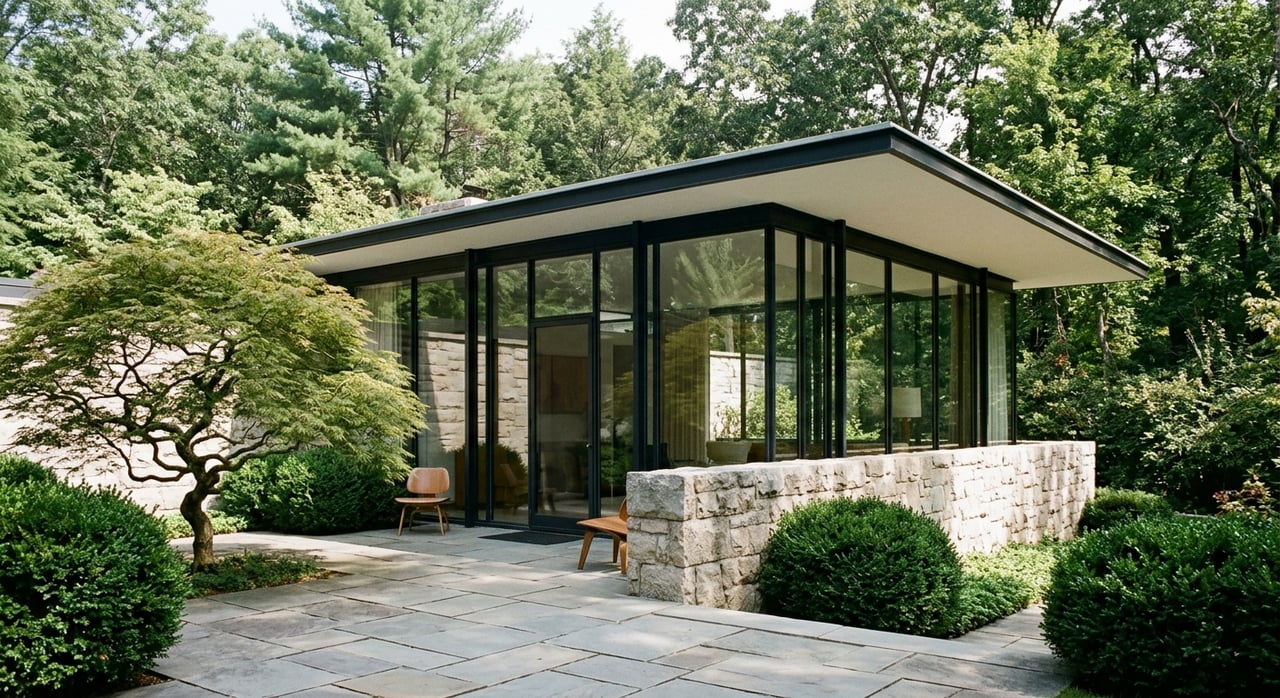
The most famous landmark is The Glass House, built by Philip Johnson between 1949 and 1995 on a 49-acre pastoral site with fourteen structures. Today, it operates as a historic site devoted to the interpretation of modern architecture, landscape, and art.
But New Canaan’s modern story goes well beyond one destination. The New Canaan Museum & Historical Society identifies Philip Johnson, Marcel Breuer, Eliot Noyes, John Johansen, and Landis Gores as the Harvard Five, whose homes became a defining part of the local landscape.
New Canaan did not become a modernist destination by accident. The town’s Plan of Conservation & Development explains that architects were drawn by proximity to New York City, modestly priced land at the time, dramatic topography, and the opportunity to live near one another and experiment.
That document also notes a significant concentration of modern houses built between 1947 and 1968. An inventory cited in the plan found that almost 100 modern houses had been built, with about 85 remaining at the time of that planning document.
That concentration matters in real estate terms. It means New Canaan is not simply a town with a few interesting exceptions. It is a place where postwar residential design became part of the local identity.
One of the most compelling things about New Canaan is that buyers are not locked into one architectural lane. Depending on your priorities, you can be drawn to very different expressions of home while staying within the same town.
You may prefer:
This is why New Canaan often resonates with buyers who think beyond square footage. Here, the feel of the house is often inseparable from the feel of the land, the light, and the design history around it.
When you explore New Canaan, it helps to look at more than finishes or room counts. Architecture here is often experienced as a whole environment.
A few details are especially worth paying attention to:
The Glass House site frames architecture, landscape, and art as an integrated experience, and that is a useful lens for buyers across New Canaan. In many homes here, the setting is not just a backdrop. It is part of the architecture.
In New Canaan, a home’s value is often tied to narrative as much as materials. A Colonial Revival residence near an estate landscape tells a different story than a midcentury modern house connected to the legacy of the Harvard Five, but both can be deeply compelling.
That is part of what makes this market so enduring. You are not just choosing a floor plan. You are choosing a relationship to history, landscape, and design.
If you want guidance on finding a home with architectural significance, distinctive character, or a more private and curated buying experience, Jaclyn Picarillo offers a thoughtful approach tailored to exceptional properties.
Jaclyn delivers white-glove service and expert representation to clients seeking exceptional properties and seamless transactions. Powered By Higgins Group Private Brokerage & Forbes Global Properties Whether you’re acquiring your first residence, elevating to a larger estate, downsizing with intention, or expanding a distinguished investment portfolio, Jaclyn delivers a bespoke real estate experience tailored exclusively to achieve your goals and exceed expectations. With over 22 years of expertise and record-breaking success as a Realtor in Fairfield County, Jaclyn approaches every transaction with tireless dedication, refined market insight, and an unwavering passion for achieving exceptional results.

JACLYN GAILHARD PICARILLO
(203) 981-5012
[email protected]
OFFICES
30 Elm St
Westport CT 06880
251 Main St
Southport CT 06890
67 Mason St
Greenwich CT 06830
FOLLOW ME