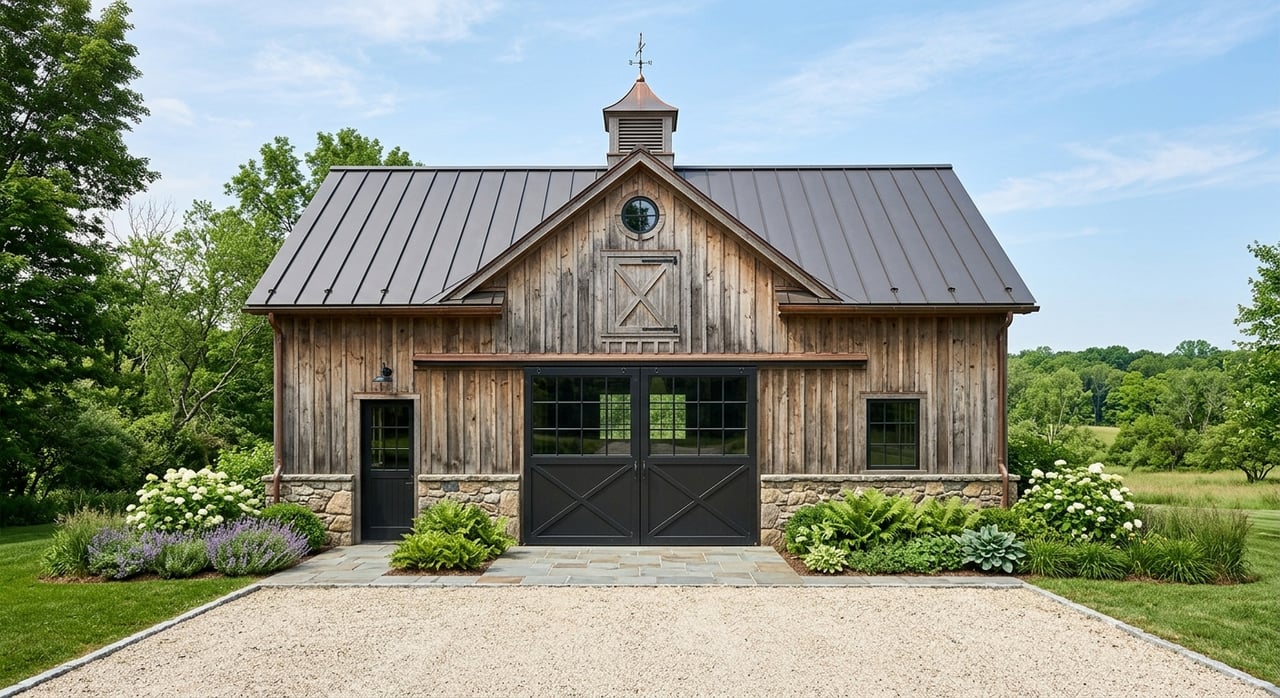
Why Easton CT Estate Properties Appeal to Lifestyle Buyers
May 14, 2026
May 14, 2026
If you picture Fairfield County as all shoreline bustle and commuter convenience, Easton offers a very different rhythm. Here, the appeal is space, privacy, and a landscape shaped by farms, preserved land, and a quieter outdoor routine. If you are drawn to estate-style properties, room for horses, or simply a home that feels more tucked away, Easton deserves a closer look. Let’s dive in.
Easton sits in Fairfield County about 25 miles west of New Haven and 50 miles northeast of New York City. Yet its identity is not defined by heavy commercial activity or a dense town-center lifestyle. The town describes itself as mostly residential property, farmland, and recreational open space with little commercial development.
That distinction matters when you are choosing a place to live. Easton offers a setting where land use shapes the day-to-day experience, from wider spacing between homes to a stronger connection to open land. For buyers seeking a property with breathing room, that can be a meaningful advantage.
The town’s official materials also point to more than twenty working farms, over one-third of its land forever preserved, and four reservoirs lying all or partially within town boundaries. In 2020, Easton had 7,605 residents, with a 2021 estimate of 7,594, and 2,727 households. That relatively small population helps explain the quieter, more private feel many buyers notice right away.
For many buyers, the word estate is less about formality and more about freedom. It means enough land to create a certain way of living, whether that includes gardens, outdoor entertaining, hobby farming, or simply a greater sense of privacy. Easton’s land-use profile supports that kind of lifestyle.
Because the town emphasizes residential property, farmland, and open space over commercial buildout, the environment feels more expansive than many nearby markets. This can appeal to buyers who value setback, scenery, and a home that feels integrated with the landscape rather than crowded by surrounding development.
Easton also stands apart statistically. Based on official figures, the town has about 277 people per square mile. By comparison, Westport reports about 1,404 people per square mile, and Fairfield comes in at roughly 2,027 people per square mile.
That lower-density profile does not make Easton better or worse. It simply makes it different. If you want walk-to-town convenience, another market may fit more naturally. If you want acreage, quiet, and a more rural New England atmosphere, Easton becomes especially compelling.
Easton’s regulations make it clear that agriculture remains part of the town’s identity. The zoning regulations explicitly define livestock as domestic animals such as horses, cows, goats, and sheep. They also allow the keeping of chickens, horses, and livestock on a farm or as accessory to a residence when the use complies with Connecticut law and generally accepted agricultural practices.
For buyers with horses or equestrian plans, that is important context. The regulations separately address equine facilities and minor accessory farm structures such as horse shelters. In practical terms, Easton is not a place where equestrian living feels like an afterthought.
The town’s Right to Farm ordinance reinforces that point. It states that agriculture is central to Easton’s heritage and future, protects farmland, and recognizes that incidental livestock noise, odors, dust, and irrigation can be part of accepted farming practice. At the same time, those activities still must comply with health, safety, zoning, wetlands, and building codes.
That balance is part of what makes Easton appealing. You get a town framework that acknowledges working land and horse-friendly uses, while still requiring appropriate oversight. For buyers seeking a polished estate property with equestrian potential, that combination can be especially attractive.
Easton’s appeal goes beyond what is allowed on paper. It is also about how the land shapes your routine. The town’s recreation and open-space materials describe Easton lands as open, where appropriate, for cross-country skiing, dog walking, fishing, hiking, riding, and snowshoeing.
That creates a different texture to daily life. Your weekends may center on trails, open preserves, and time outdoors rather than crowded retail districts or busy downtown schedules. For many buyers, that is the luxury.
The town points to Mill River Open Space, nearby Aquarion reservoirs, the Centennial Watershed State Forest, the Saugatuck-Aspetuck trail network, and Aspetuck Park. Aspetuck Land Trust also maintains a broad preserve network in the region, including Easton preserves and Trout Brook Valley Preserve with 14 miles of trails.
If you are considering an estate or equestrian property, this setting adds value in a way square footage alone cannot capture. The surrounding environment supports a lifestyle centered on riding, walking, gardening, and enjoying a more natural pace. In Easton, the land around you is part of the experience.
Many Fairfield County buyers compare Easton with Fairfield or Westport, especially in the early stages of a search. These are all established markets, but they offer notably different living environments. Easton’s defining traits are its lower density, preserved land, farm presence, and limited commercial development.
Fairfield’s official materials describe it as primarily a residential community with significant commercial development. Westport’s official materials emphasize a live-work-play lifestyle, proximity to New York City, and single-family homes primarily on 1- and 2-acre lots around transit and commerce. Easton, by contrast, emphasizes farmland, preserved land, and a quieter residential setting.
Here is the simplest way to think about the difference:
| Town | General Feel | Land Use Pattern |
|---|---|---|
| Easton | Quiet, rural, private | Farmland, preserved land, residential property, limited commercial development |
| Fairfield | More active, more built-up | Residential community with significant commercial development |
| Westport | Lifestyle-oriented and connected | Residential areas tied more closely to transit, commerce, and a live-work-play setting |
If your priority is being close to busy commercial centers, Easton may feel too removed. If your priority is a home with a stronger sense of retreat, Easton may feel exactly right.
Easton tends to resonate most with buyers who want privacy, land, and an outdoor-centered daily rhythm. That can include horse owners, gardeners, buyers envisioning a studio or retreat, and households that value acreage more than walkable retail access. This is an inference supported by the town’s farm-heavy land use, equestrian zoning language, preserved open-space network, and low-density profile.
It can also appeal to buyers who see a property as more than a house. In Easton, a home may be part residence, part landscape, and part lifestyle setting. That is often what draws buyers looking for distinctive estate properties with long-term personal value.
For a boutique brand that values story and lifestyle fit, Easton is notable because it offers a setting where the property and the land often matter equally. The right home here is not only about finishes or architecture. It is about how the acreage, use potential, and surrounding environment support the life you want to build.
Even in a horse-friendly and farm-aware town, every property is different. Buyers should confirm lot-specific wetlands, setbacks, and any barn or equine plans with the town’s land-use office before assuming a property can support larger agricultural use. This step is essential if you are purchasing with a specific vision in mind.
It is also wise to look beyond the house itself. Consider how much land is usable, how the parcel is laid out, and whether the property aligns with your intended routine. A beautiful home on paper may not function the way you need if your goals include riding, gardening, accessory structures, or expanded outdoor living.
When you approach Easton with both imagination and due diligence, you give yourself the best chance of finding the right fit. That is especially true in a market where lifestyle value often comes from details that are unique to the land.
Easton is not trying to compete with more commercial, higher-density towns nearby. Its appeal is more specific and, for the right buyer, more enduring. If you are looking for estate character, equestrian potential, and a Fairfield County setting shaped by open land and privacy, Easton offers a distinctive opportunity.
For a private introduction to Easton’s most compelling lifestyle properties, connect with Jaclyn Picarillo.
Jaclyn delivers white-glove service and expert representation to clients seeking exceptional properties and seamless transactions. Powered By Higgins Group Private Brokerage & Forbes Global Properties Whether you’re acquiring your first residence, elevating to a larger estate, downsizing with intention, or expanding a distinguished investment portfolio, Jaclyn delivers a bespoke real estate experience tailored exclusively to achieve your goals and exceed expectations. With over 22 years of expertise and record-breaking success as a Realtor in Fairfield County, Jaclyn approaches every transaction with tireless dedication, refined market insight, and an unwavering passion for achieving exceptional results.

JACLYN GAILHARD PICARILLO
(203) 981-5012
[email protected]
OFFICES
30 Elm St
Westport CT 06880
251 Main St
Southport CT 06890
67 Mason St
Greenwich CT 06830
FOLLOW ME