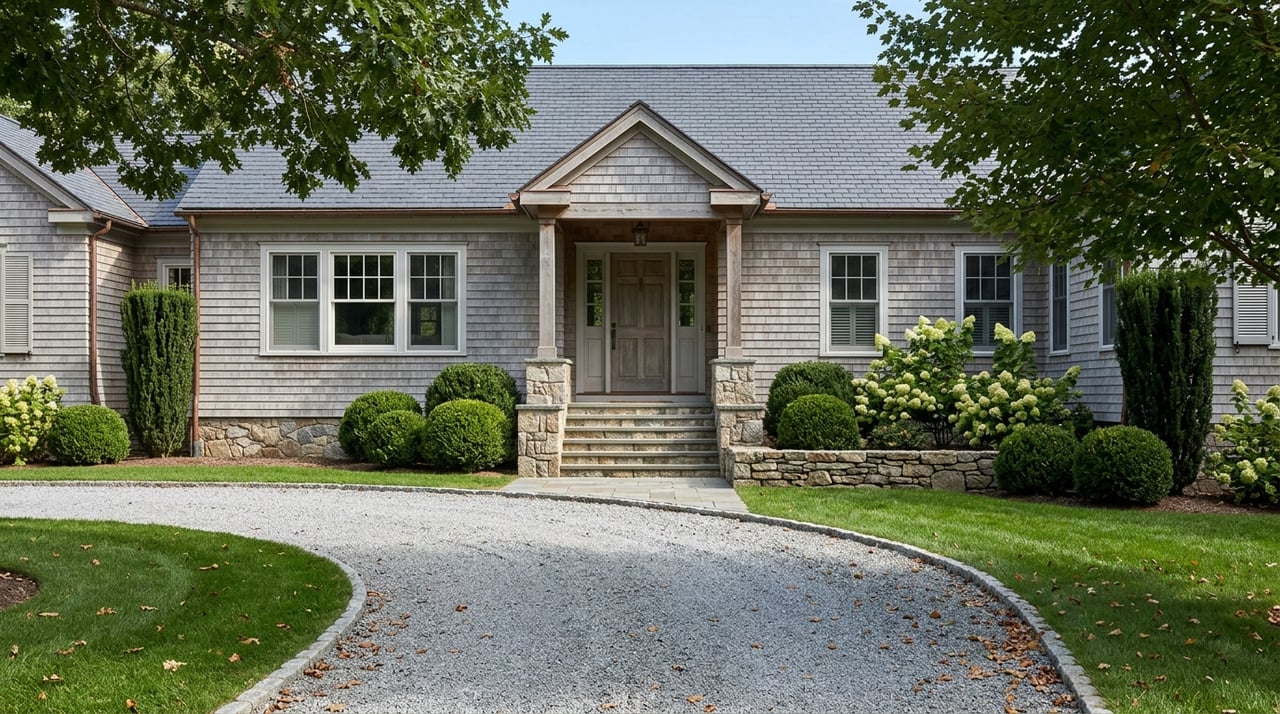
Selling a Luxury Estate in Easton CT for the Right Buyer
June 11, 2026
June 11, 2026
If you are selling a country estate in Easton, square footage alone will not bring the right buyer to the table. In this market, buyers are often drawn first by land, privacy, and the way a property lives day to day. When you understand what makes Easton different and present your estate with clarity, you can attract buyers who truly value the property. Let’s dive in.
Easton is not a high-turnover suburban market where buyers focus only on finishes and bedroom count. The town has more than twenty working farms, and more than one third of its land is forever preserved, with 7,724 acres of protected open space reported in its open-space plan. Local planning policy also emphasizes watershed protection and low-density residential character.
That setting shapes buyer expectations. Your estate is not competing only on the home itself. It is also being evaluated for acreage, visual privacy, stewardship, and how clearly the land’s value is understood.
The town’s housing profile supports that approach. Census data shows an estimated 7,838 residents, 2,539 households, an 88.1% owner-occupied rate, and 89.3% of residents living in the same home a year earlier. With a median household income of $222,604 and a median owner-occupied home value of $783,100, Easton points to a stable, affluent market where many buyers are looking for a long-term lifestyle fit.
When you sell a country estate, the goal is not maximum attention from everyone. The goal is qualified attention from the buyer who understands what your property offers and is prepared to pay for it.
In Easton, that buyer often falls into a few likely groups. Each one sees value through a slightly different lens, which should shape how your home is presented.
Some buyers want a primary home with meaningful separation from neighbors, generous setbacks, and a quieter setting. Easton’s average commute time of 32.9 minutes suggests the town can appeal to households balancing privacy with regional access.
For this audience, your marketing should show arrival, approach, screening, and the experience of living on the site. They want to understand how the home feels, not just how it photographs.
Other buyers care about functionality beyond the main residence. They may be looking at pasture, fencing, barns, paddocks, and rideable land, especially in a town with a strong rural identity and trail and open-space areas that permit riding where appropriate.
For these buyers, details matter. A beautiful house will not be enough if the land improvements are vague or undocumented.
Easton also attracts buyers who value tree cover, fields, forests, water protection, and visual calm. The town’s policies explicitly emphasize watersheds, forests, fields, and habitats, so buyers often see the landscape as part of the estate itself.
These buyers respond well to thoughtful presentation. They want to know not only what the property includes, but how it has been cared for and what protects its character.
In Easton, a strong estate listing should make the land easy to understand. Buyers should be able to quickly see what is usable, what is protected or constrained, where the home sits on the parcel, and how the property supports daily living.
That means the marketing package should go beyond standard interior photography. For a country estate, the land is part of the story and often part of the price justification.
Aerial imagery can help buyers understand scale, layout, boundaries, approach, and privacy. Ground-level photography should then bring the experience to life through driveways, gates, stone walls, gardens, terraces, barns, paddocks, and view corridors.
This is especially important in Easton because the town’s land-use framework makes the site itself central to value. If a buyer cannot read the land clearly, it becomes harder for them to picture ownership with confidence.
Not all acreage is equally useful. Buyers will want to know which portions are open, wooded, fenced, improved, or affected by wetlands, restrictions, or setbacks.
A good listing package should help answer practical questions early. If there is a site plan, boundary map, or survey that helps explain the property, that information can reduce uncertainty and strengthen buyer trust.
A country estate sells best when the story fits the property. If your home offers privacy, open lawns, formal gardens, a barn, or a well-planned relationship between house and land, those elements should be presented as part of a cohesive daily experience.
The strongest story is usually the truest one. In Easton, that often means leading with privacy, stewardship, acreage, and legibility rather than relying only on luxury finishes.
Luxury buyers may move quickly when they feel confident. They also tend to ask detailed questions early, especially when a property includes acreage, outbuildings, private systems, or tax classifications.
If you want to reach the right buyer, prepare the answers before the questions arrive.
A current survey or clear boundary map is one of the most useful documents in an Easton estate sale. It helps buyers understand the parcel and can clarify where improvements, driveways, fences, and open areas sit in relation to the property lines.
You should also gather any records related to easements, conservation restrictions, or approvals that affect the land. Buyers will want to know what may shape future use.
Private systems are an important part of due diligence in Easton. Connecticut DPH says that before the sale of real property with a private or semipublic well, the owner must provide notice that well-testing educational materials are available.
DPH also states that well owners are responsible for water quality, local health departments have authority over siting and approval before construction, and annual testing for basic indicators is recommended. Easton is served by the Aspetuck Health District, so local oversight matters in the transaction process.
For septic, DPH notes that on-site sewage systems are the primary disposal method in rural and low-density suburban areas. It recommends pumping and inspection roughly every 3 to 5 years, with records kept for the next owner.
If you have maintenance records, inspection reports, or service history, gather them early. These records can help reassure buyers that the property has been cared for responsibly.
If your estate includes a barn, arena, addition, pool, generator, or other structures, buyers will likely ask whether those improvements were properly permitted or approved. In a town where land use, wetlands, and horse-related uses can matter, this is not a minor detail.
Easton’s land-use office provides technical assistance to the Planning and Zoning Commission, Inland Wetlands Commission, and Zoning Board of Appeals. That makes it especially important to verify relevant approvals before the property goes to market.
If your land is classified under PA 490 for farm or forest use, that status should be addressed clearly in the sale strategy. Easton’s assessor explains that qualifying farm and forest land can be assessed on current use, but the classification requires an application and does not transfer automatically to a new owner.
The assessor also notes that PA 490 may trigger an additional conveyance tax if the property is sold within 10 years under the statute’s conditions, and it does not override zoning, conservation, building, or health rules. If this applies to your estate, clear explanation upfront can prevent confusion later.
The right Easton buyer is often not looking for a project wrapped in uncertainty. They are looking for a property with a strong sense of place and a seller who can present it with clarity.
That is why confidence becomes part of the marketing itself. When acreage is legible, records are organized, and the estate’s use case is well defined, buyers can focus on the opportunity instead of the unknowns.
Some country estate sellers do not want broad, undifferentiated exposure. Privacy may matter because of the home’s profile, the owner’s circumstances, or the simple desire to keep the process measured and controlled.
For distinctive Easton estates, a tailored approach can be more effective than a generic launch. Thoughtful storytelling, strong visual presentation, and targeted buyer matching can help you reach people who understand rural luxury without turning the sale into a mass-market event.
If you want the strongest result, think like the buyer you want to attract. They are likely comparing more than kitchens and baths. They are comparing privacy, land quality, documentation, and how seamlessly the property supports the life they want to live.
That means your preparation should focus on a few core priorities:
In Easton, this is what helps a listing stand apart. A country estate is not just a residence. It is a setting, a structure of daily life, and often a legacy asset that deserves careful positioning.
When you are ready to position your Easton property with clarity, discretion, and elevated storytelling, Jaclyn Picarillo can help you reach the buyer who understands its value.
Jaclyn delivers white-glove service and expert representation to clients seeking exceptional properties and seamless transactions. Powered By Higgins Group Private Brokerage & Forbes Global Properties Whether you’re acquiring your first residence, elevating to a larger estate, downsizing with intention, or expanding a distinguished investment portfolio, Jaclyn delivers a bespoke real estate experience tailored exclusively to achieve your goals and exceed expectations. With over 22 years of expertise and record-breaking success as a Realtor in Fairfield County, Jaclyn approaches every transaction with tireless dedication, refined market insight, and an unwavering passion for achieving exceptional results.

JACLYN GAILHARD PICARILLO
(203) 981-5012
[email protected]
OFFICES
30 Elm St
Westport CT 06880
251 Main St
Southport CT 06890
67 Mason St
Greenwich CT 06830
FOLLOW ME