Living Well In Wilton: Nature, Heritage, And Refined Homes
June 18, 2026
June 18, 2026
If you are looking for a town that feels peaceful without feeling remote, Wilton makes a strong case from the start. Here, open land, historic character, and elegant homes are not side notes. They shape daily life in a way that feels both grounded and refined. If you want to understand what living in Wilton really offers, this guide will walk you through its landscape, culture, housing, and commuter appeal. Let’s dive in.
Wilton is a preserved New England residential town with a distinctly rural feel, yet it remains practical for daily commuting. The town highlights easy access to the Merritt Parkway and I-95, along with two train stations that offer free parking. That balance is a big part of its appeal.
Official town data in the 2025 bond statement lists Wilton’s 2023 population at 18,439, with a density of 684 people per square mile. That points to a low-density setting rather than a tightly packed suburban corridor. For many buyers, that means more breathing room, more privacy, and a quieter daily rhythm.
Wilton also presents a strong picture of long-term stability. The town’s per-capita income was reported at $110,930, and 73.9% of adults age 25 and older held at least a bachelor’s degree. Those numbers help explain why Wilton is often seen as a place where people put down roots and invest in the quality of their surroundings.
One of the clearest lifestyle advantages in Wilton is how deeply nature is woven into the town. According to Wilton’s 2019 Plan of Conservation and Development, about 23% of the town consists of open space, with about half of that formally protected. This is not just scenic background. It is a defining part of the town’s identity.
The local trail network supports that outdoor lifestyle in practical ways. The town notes access to town, state, and federal trails, Wilton Land Conservation Trust preserves, walkable easements, and the Norwalk River Valley Trail. The land trust also reports that it owns or holds easements on about 840 acres.
For you as a buyer, that means outdoor access can become part of your regular routine rather than an occasional outing. Walks, quiet recreation, river views, and preserved land are built into the experience of living here. In a market where many towns talk about lifestyle, Wilton offers it in visible, lasting form.
Schenck’s Island is one of Wilton’s most approachable open spaces. Located in Wilton Center, it includes a large lawn, scenic meadow, walking trails, and fishing along the Norwalk River. It is the kind of place that adds calm and visual beauty to an ordinary afternoon.
Merwin Meadows brings a more active community setting. The park includes a swimming pond, beach, pavilion, playground, and athletic field. It gives residents another way to enjoy the outdoors without leaving town.
Woodcock Nature Center adds even more daily access to nature. Its trails are open every day from dawn to dusk for hiking and passive recreation, making it a simple choice for a quiet walk or a reset after work.
The Norwalk River Valley Trail is another major lifestyle asset. The trail organization describes it as a 30-mile route linking Norwalk, Wilton, Redding, Ridgefield, and Danbury. In Wilton, it reinforces the town’s connection to a broader regional network while still feeling rooted in local landscape.
Wilton’s appeal is not only about scenery. It is also about continuity. The town’s recorded history reaches back to 1640, with the first meetinghouse built in 1726 and separate town status granted in 1802.
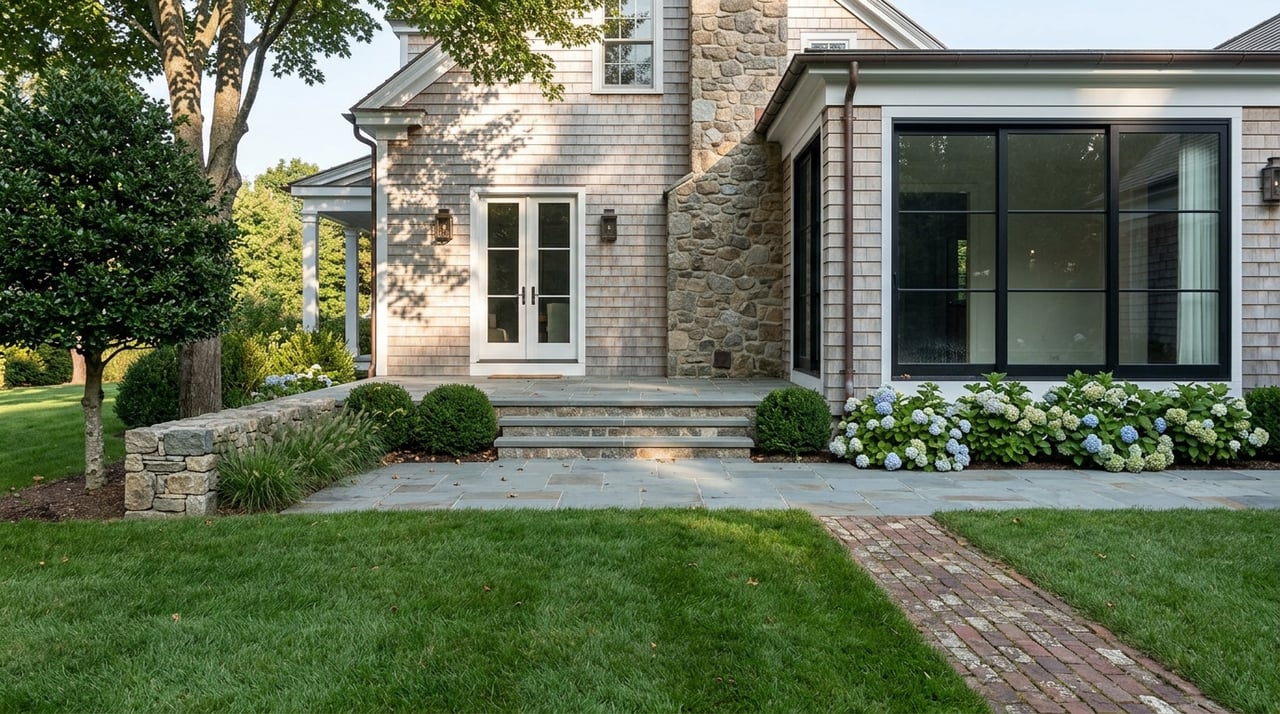
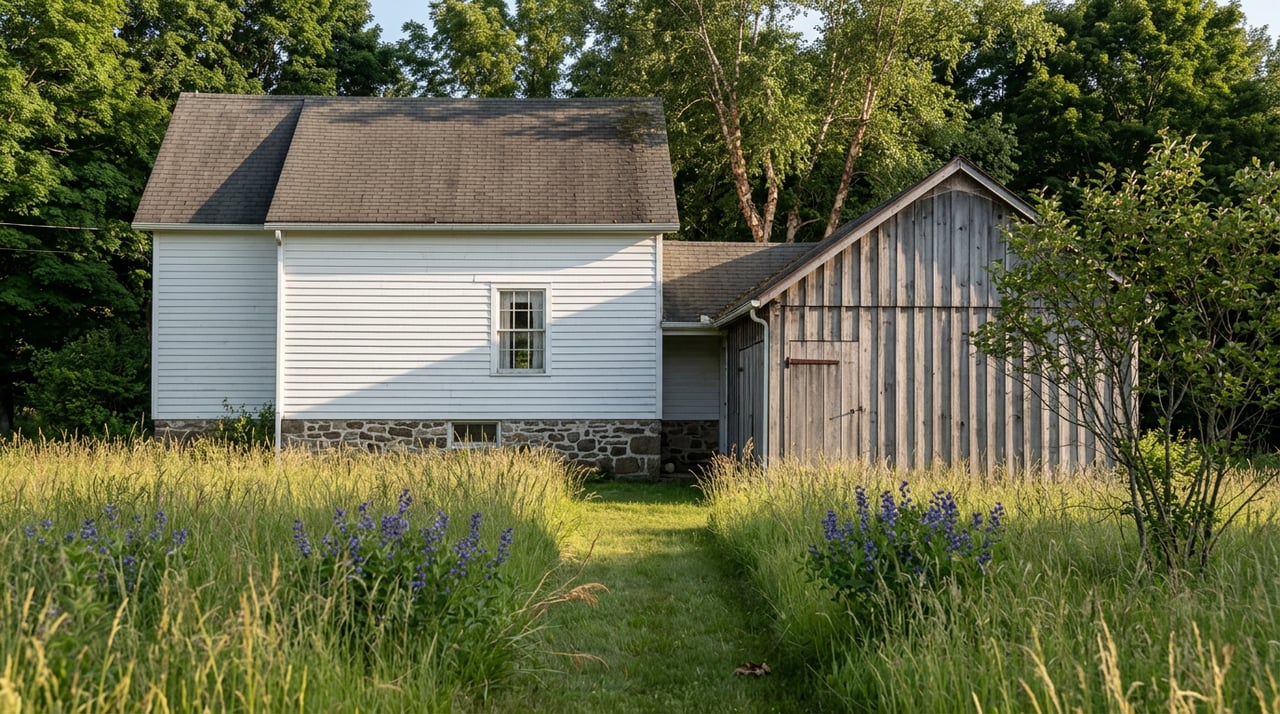
Because growth moved more slowly in the 19th century, many 18th- and 19th-century homes were preserved instead of being cleared for more aggressive development. That helps explain why Wilton feels historically layered today. You do not just see history in isolated landmarks. You feel it in the town’s overall setting.
The town’s 2019 planning work identifies one National Historic Site, three National Historic Districts, five Local Historic Districts, one State Scenic Road, and five Local Scenic Roads. Those designations support what many buyers notice right away: Wilton has worked to protect the character that makes it distinct.
The Wilton Historical Society offers one of the clearest windows into the town’s past. Its museum complex includes houses dating to around 1740 and 1770, an 1840 barn gallery, a blacksmith shop, a colonial herb garden, and period-room exhibits. It is a meaningful cultural anchor, not just a small local footnote.
Wilton Library adds another layer to town life. The library describes itself as Wilton’s cultural and intellectual center and includes the Brubeck Room and Brubeck Collection, world-class jazz concerts, and one of the world’s premier jazz archives, all within a mid-century modern building. That combination of architecture, programming, and scholarship gives the town a stronger cultural profile than many purely residential communities.
The Wilton Playshop also contributes to that rhythm. Operating as a volunteer-run community theatre since 1937, it offers live theatre and special events in a 125-seat venue. For residents, this means the town’s lifestyle is not limited to private homes and open land. There are also shared civic and cultural experiences that enrich daily life.
A common question from buyers is whether Wilton is walkable. The most accurate answer is that walkability is strongest in Wilton Center and along the trail network. Wilton’s Plan of Conservation and Development notes that pedestrian and biking infrastructure outside Wilton Center is limited.
That makes Wilton different from places built around dense mixed-use blocks. Here, the appeal is not full-town walkability. It is a quieter residential pattern with a central area that supports a more pedestrian-friendly experience.
The town’s current planning vision for Wilton Center leans into that strength. It imagines a pedestrian-oriented center with a Main Street centerpiece and a River Walk along the Norwalk River. That forward-looking approach matters because it shows a town trying to improve its core while respecting its scale and identity.
Wilton’s housing stock strongly supports the lifestyle story. Detached single-family homes make up 83.5% of the town’s housing units, and 87.8% of homes are owner-occupied. That points to a market defined by private residential living rather than transient density.
The age of the housing stock is also broad, which gives buyers a meaningful range of architectural possibilities. About 10.8% of homes were built in 1939 or earlier, 37.0% from 1940 to 1969, 31.8% from 1970 to 1989, 15.6% from 1990 to 2009, and 4.8% in 2010 or later. In practical terms, that can mean everything from antique charm to more recent construction, often within the same preservation-minded setting.
Price points reinforce Wilton’s position as an upscale market. In the town’s 2025 bond statement, 51.3% of owner-occupied homes were valued between $500,000 and $999,999, while 37.5% were valued at $1 million or more. The median sales price was reported at $891,300.
For buyers who care about architectural integrity, Wilton offers something especially important. The Village District Design Advisory Committee and Architectural Review Board review projects in Wilton Center and Cannondale, with attention to building placement, public views, roadways, paving materials, signage, and the protection of village character.
That review structure sends a clear message. In key areas, new work is expected to fit its setting rather than overpower it. For buyers drawn to homes with story, scale, and context, that preservation-minded culture can be a meaningful advantage.
Wilton’s natural beauty often gets the spotlight, but commuter practicality remains part of the equation. The town specifically notes easy access to the Merritt Parkway and I-95, as well as two train stations with free parking. For many households, that helps Wilton deliver a more relaxed home environment without cutting off access to larger employment centers.
This balance is central to the town’s identity. Wilton is not trying to be an urban node. It offers a lower-density residential setting where space, quiet, and landscape matter, while still supporting the routines of regional travel and work.
Wilton tends to resonate with buyers who want more than a house. They are often looking for a setting with visual calm, architectural range, and a sense of permanence. The town’s strongest lifestyle narrative is built around preserved landscape, farming heritage, arts and history, and a housing stock that ranges from antique to newer detached homes.
Ambler Farm is a good example of that blend. The town purchased 22 acres of the 200-year-old working farm, and the farm stand operates on Saturdays at the farm and Wednesdays at the Wilton Farmers’ Market from June through October. It is a simple detail, but it says a great deal about the town’s character.
If you value privacy, open space, and homes that feel connected to place, Wilton offers a compelling mix. It is serene, but not isolated. It is historic, but still active. And for the right buyer, that balance is exactly the point.
If you are considering a move to Wilton and want guidance on homes with architectural distinction, heritage value, or a true lifestyle setting, Jaclyn Picarillo offers a curated, high-touch approach designed around discretion, storytelling, and fit.
Jaclyn delivers white-glove service and expert representation to clients seeking exceptional properties and seamless transactions. Powered By Higgins Group Private Brokerage & Forbes Global Properties Whether you’re acquiring your first residence, elevating to a larger estate, downsizing with intention, or expanding a distinguished investment portfolio, Jaclyn delivers a bespoke real estate experience tailored exclusively to achieve your goals and exceed expectations. With over 22 years of expertise and record-breaking success as a Realtor in Fairfield County, Jaclyn approaches every transaction with tireless dedication, refined market insight, and an unwavering passion for achieving exceptional results.

JACLYN GAILHARD PICARILLO
(203) 981-5012
[email protected]
OFFICES
30 Elm St
Westport CT 06880
251 Main St
Southport CT 06890
67 Mason St
Greenwich CT 06830
FOLLOW ME